Websites for roofers that prove the part nobody climbs up to see.
A roof is the one job on a house the customer never gets to inspect. They are paying for materials they cannot count and work they will only ever view from the pavement, in a trade that has spent years living down door knocking and deposits that went missing. Websites for roofers stand or fall on evidence.
Nobody is going up there to check.
Every other trade leaves something behind that can be judged. A bathroom gets used. A board gets tested. A roof gets a glance from the front garden, forty feet below, usually in the rain, and after that it is taken on trust for the next twenty years. Which is why the worry here is not really the price. It is whether the membrane went on under the tiles, whether the flashing was replaced or simply painted over, and whether anyone would ever be any the wiser. A roofing website has to answer that before it is asked, because it is almost never asked out loud.
Some of your competition knocked on the door.
No trade drags a reputation around like this one. Everybody has heard the story, or had it from a relative: the van nobody sent, the tiles said to be slipping, money up front for materials, then silence. The roofers I have met are nothing like that and are quietly sick of sharing a name with it. That changes nothing. The suspicion is in the room before you are, and the person on your website is half looking for a reason to rule you out.
What separates you from that van is dull, and checkable. A trading address that is a place rather than a mobile number. A company number somebody can type into Companies House. A quote that arrives in writing with the access priced on its own line, instead of a figure said on a doorstep and quietly forgotten by the time the scaffold goes up. None of it is exciting to put on a page. All of it is the difference between the firm that gets rung back and the one that does not.
Some of that dullness is common to the lot of us, and the rest of this page is what roofing adds on top, which is a fair bit. The part every trade shares is set out under web design for tradesmen
What roofer website design has to prove.
Before and after, shot from the same spot.Two photographs of one roof taken from the same place is the most persuasive thing you own, and it needs no explanation underneath it. A sagging ridge and cracked mortar next to a finished slope settles the question in about a second and a half.
The part of the roof they will never climb up to see.Ladder shots and drone passes over the ridge, the valleys, the leadwork where an extension meets the wall. Almost every roofing site shows a finished house from the pavement, which proves nothing, so this is the evidence nobody else is bothering to offer.
A repair and a re-roof, told apart in plain words.Much of what looks like a gap between two quotes is a gap between two different jobs. When the page explains what a patch is, what a strip and re-cover is, and what each is honestly good for, the customer stops comparing prices that were never for the same work.
Every quote in writing, and the page says so.Itemised, with the access, the materials and the labour separated out, and stated openly because the alternative is a figure said out loud on a doorstep, which is the exact thing people are frightened of. It sets the tone before the first call.
Scaffolding explained before it lands on the price.It is the line that surprises people and often the whole reason a rival quote looked cheaper. Say why access has to be paid for, roughly how long towers stay up and whose responsibility they are, and it stops reading like padding.
Storm work with its own page, ready before the weather.Written in a calm week and left standing: what you can look at now, what has to wait, how far behind you are running and what a temporary make safe involves. In the days after a named storm nobody has time to build one, and that is the week it earns its keep.
Insurance jobs on their own route.Somebody with a claim in progress wants photographs taken before anything is moved, findings in writing that an adjuster will accept, and a firm that will talk to the insurer directly. What never goes on the page is a claim about what a policy covers, because that is the insurer’s call and nobody else’s.
Guarantees written as figures.How many years, on which parts of the work, backed by whom, and what happens to it if you stop trading. Put it in numbers and it means something. Leave it at the word guaranteed and anybody reading carefully treats it as wallpaper.
The firm behind the van, in public.A trading address that is a place rather than a mobile number, a company number that can be dropped into Companies House, how long you have been going and the names of the people who turn up. It costs nothing to publish and it is precisely what somebody is hunting for.
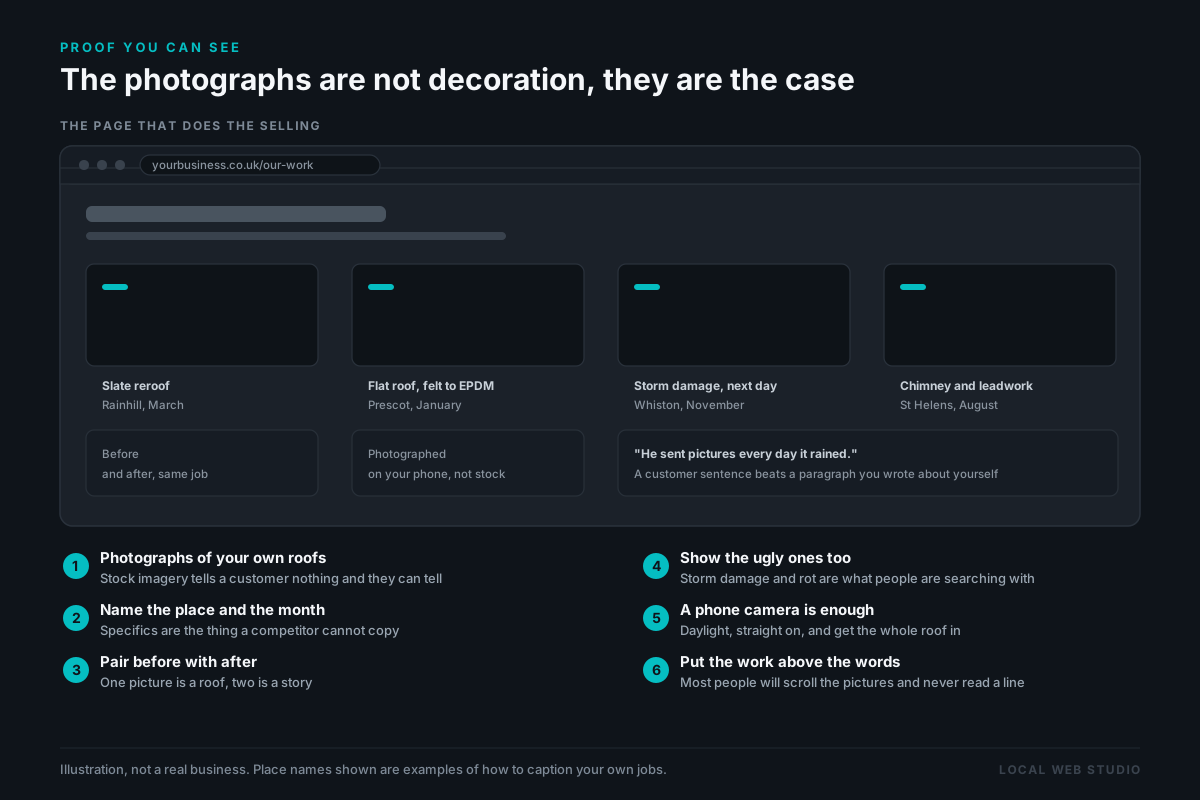
The photographs are not decoration. They are the case.
On most trade websites the pictures are there to break up the writing. Here they carry the entire argument, because they are the only way a homeowner ever gets to inspect a roof. Nobody can judge how you bedded a ridge tile from a phone screen. What anybody can judge is whether a slope of slate runs straight, whether the lead around a chimney was dressed or bodged, and whether the person holding the camera was proud of the job or taking a snap on the way to the van.
So the shots worth having are specific ones. The valley beforehand, packed with moss and blown mortar, and the same valley after. The leadwork close enough to see the joint. A flat roof halfway through a strip, old covering off and the deck showing, because that photograph proves both what was underneath and what you did about it. The drone pass over a finished re-roof, which is the only time most people will see the whole thing at once. And the pair that does more work than all of them together: the same roof, from the same spot, before and after.
What does not go on is a stock photograph of a roof under American sunshine, or the smiling man in the hard hat that two other firms in your area are also using. People spot those far more often than you would think, and once one is recognised the whole page reads as a front. Ten honest pictures off your own phone will beat a paid library every time, and the ones taken from the ladder are worth more than anything taken from the ground.
Storm damage arrives all at once, and so does everybody else.
A named storm comes through on a Tuesday night and by Wednesday morning half the town has slipped tiles, a lifted ridge or water coming through a bedroom ceiling. Every roofer for thirty miles is booked solid, the same three or four searches are being typed by hundreds of people in the same hour, and none of them are in a patient frame of mind. It is the one part of this trade that behaves like an emergency, and it is worth being ready for rather than surprised by.
It is also the exact week the door knocking starts. Vans that were nowhere on Monday are working the streets by Wednesday, offering to sort it there and then for cash while everybody else is quoting. Somebody who has spent ten minutes on a proper website first is a much harder sell for that. So the page for that week gets written in a quiet month and left ready: what you can attend now, what will have to wait, how far behind you are running, and what a temporary make safe involves so a worried person can stop the water without committing to the full job on the spot.
Then the claim begins, and that runs at a completely different speed. Photographs taken before anything is disturbed, findings written up in a form a loss adjuster will accept, dates, and a roofer willing to speak to the insurer directly. What the site will not do is tell anybody what their policy covers. That wording varies from insurer to insurer, the decision is not yours to make, and saying so plainly while promising to supply everything the claim needs is a stronger position than a reassurance you cannot stand behind.
The nearest thing I have built to this is Marlborough Builders in Prescot. They run a roofing division alongside their joinery side, slating, tiling, flat roofs and leadwork, and the site covers both. That makes it a building firm's website with roofing properly set out on it, not a roofing company's website, and I am not going to inflate it into a roofing case study. It is the work to judge me on. Read the full case study
Common questions
Have a question not listed here? Call or text Danny and you'll get a straight answer.
Get in touchAnybody can say the work was done properly.
Very few can show it. The before and the after, the ridge and the flashing nobody else thinks to photograph, a quote in writing with the access on its own line, an address and a company number that lead somewhere real. If it looks like a fit, I'll design your homepage around your own finished roofs and send it over before you have agreed to anything, so what you are looking at is a real page rather than a description of one. If it turns out not to be for you, it has cost you nothing and me an afternoon.
Last updated: