Plumber website design for the minute somebody has water on the floor.
Nobody plans a plumber. They find water where it should not be, reach for the phone, and ring whoever looks reachable first. Plumber website design comes down to that minute and very little else: turning up in the search, being readable on a phone held in one wet hand, and being one tap away from a call.
Nobody shortlists three plumbers with the ceiling coming down.
There is no comparing of quotes and no thinking it over. There is a search, a thumb, and a handful of results that get about a second each. Whoever answers gets the job, and the ones who never got rung will never know they were in the running. Which means the site is not there to persuade anybody of anything. It is there to be found, understood and dialled before the person holding the phone gives up on you and moves down the list.
Turning up in a search and being easy to reach is the baseline in any trade, and everything below here is the half that only applies to plumbing. If it is the baseline you are still weighing up, the broader case sits on my page about web design for tradesmen
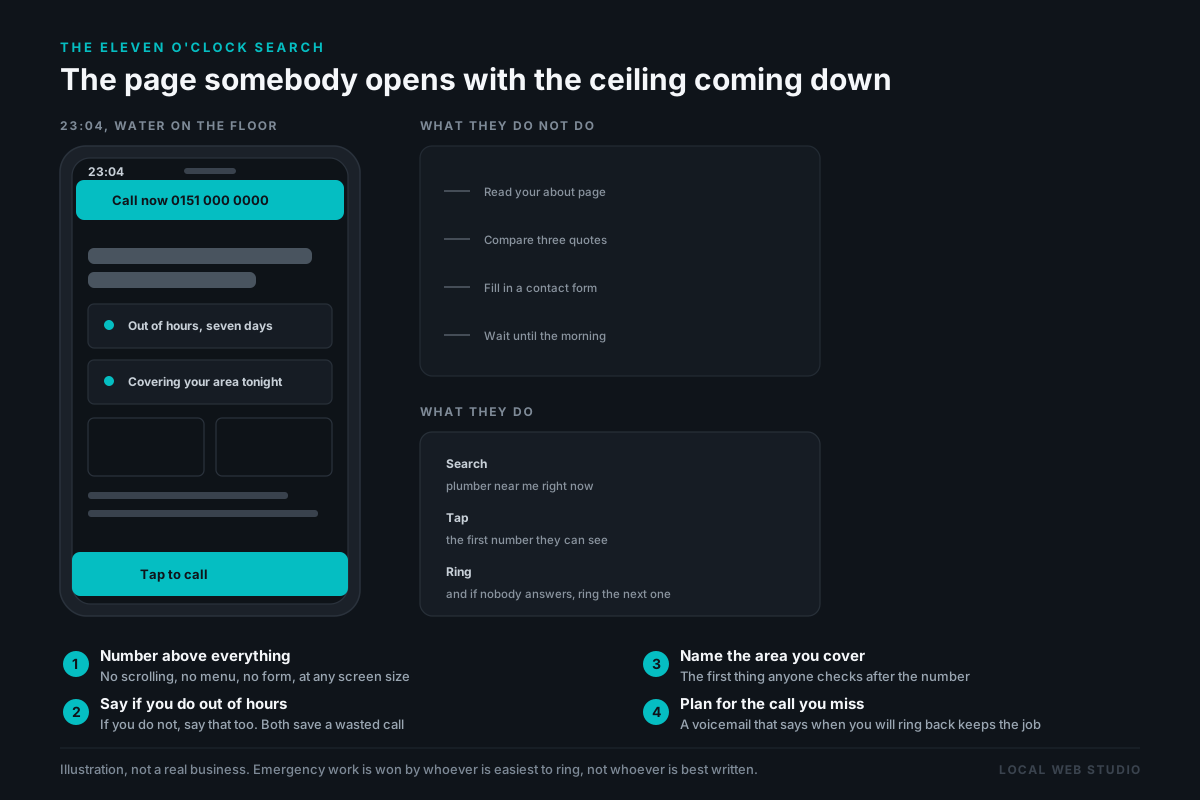
Most of it happens when you are not at work.
Pipes go on a Sunday. Boilers pack in on the first cold morning of the year, and then on every one after it. A tank lets go over Christmas when half the trade has shut down until January. Your site is the only part of the business awake at those hours, and what it says then decides whether you get the call or hear about the job weeks later from a neighbour. Get that right and it also does the quieter half of the work: the customer who came to you at midnight with a leak, saw a bathroom you had fitted, and rang back in the spring about the whole room.
What I build into a plumbing website.
Callout terms, before anybody dials.Whether you turn out at night, whether you work weekends, what the callout costs and roughly how long you take to get there. Stated at the top, not buried three clicks in, so the wrong jobs filter themselves out and the right ones ring with the money already agreed.
Your Gas Safe number where it is actually looked for.As text, on the first screen, next to your name, so it can be copied straight into the register. A badge image at the bottom of a page proves nothing to somebody who knows how to check, and nothing goes on the site at all unless you are on the register.
Four jobs, four different customers.A boiler swap, a blocked drain, a bathroom fit and a leak under the sink are not one service with four bullet points. Different budgets, different urgency, different questions. Each gets its own space, so the person with water coming through a ceiling is not reading about tile choices.
Landlord certificates treated as the repeat work they are.Gas safety certificates come round every twelve months and letting agents hold more than one property. That gets its own page and its own enquiry route, one that takes a list of addresses and a renewal date instead of a single job description.
The areas, named out loud.Prescot, Whiston, Huyton, St Helens, wherever you actually go, written as place names rather than a vague radius. Somebody two streets outside your patch should be able to tell before they ring, and somebody inside it should see their own town on the page.
Built for one hand and one bar of signal.The number is tappable from anywhere on the page, the tap target is big enough for a wet thumb, nothing slides over the top of it, and the page loads on a poor connection in a cellar. This is the whole thing on a plumbing site, and it is where most of them fail.
Enough of a face to open the door to.At nine at night somebody is deciding whether to let you into their house. A real photograph, a real name, a registration they can look up and a van with your name on it settle that quietly, well before you knock.
I have not built a site for a plumber yet. The closest comparable work is Marlborough Builders in Prescot, a building company with a different customer but the same underlying problem: known to the people who already knew them, invisible to everybody else. Read the full case study
Common questions
If you work differently to any of this, ring or text Danny and he'll tell you what would change.
Get in touchSomebody in your area is searching for a plumber tonight.
They will ring whoever they find. Before you commit to anything, I will put together a homepage for your business so you can actually look at it: your number, your registration, your areas and your callout terms, arranged the way somebody reads a page with the water still running. You look, then you decide. The sooner it is up, the sooner it is catching calls that are currently going to the next plumber down.
Last updated: